What Is the Best Prop Firm Trading Strategy to Pass a Funded Challenge
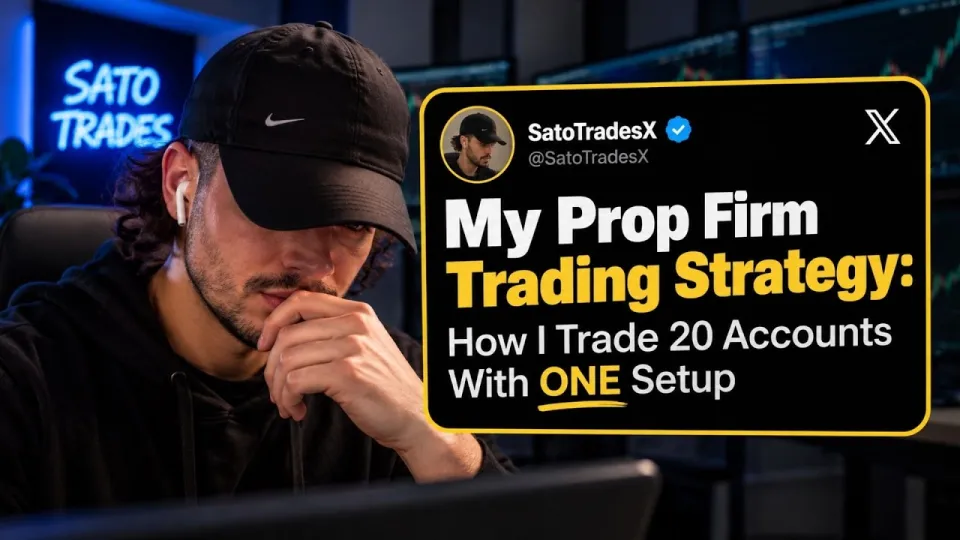
Video: Prop Firm Trading Strategy: How to Pass a Funded Challenge in 2026
· based on the channel Sato Trades
Key takeaways
- Use a mechanical trading system focused on futures with 1-minute charts
- Key is precise risk management to protect funded accounts
- Trade using daily and intraday ES & NQ levels marked on TradingView
- Set limit orders, stop losses, and take profits and avoid overtrading
- Scaling accounts and trading multiple simultaneously increases payout potential
Prop firm trading strategy is crucial for traders aiming to pass funded challenges and secure consistent payouts. The best approach relies on a mechanical trading system that uses futures contracts, primarily trading the E-mini S&P 500 (ES) and Nasdaq 100 (NQ) on 1-minute charts. This strategy emphasizes clear entry points, strict risk management, and disciplined execution to meet prop firm evaluation criteria and scale accounts effectively.
Understanding Prop Firm Trading Strategy
A prop firm trading strategy is designed to satisfy the evaluation rules of proprietary trading firms, which fund traders with capital after they pass a challenge or evaluation phase. The core of this strategy involves trading futures contracts on ES and NQ using defined daily and intraday levels. Traders mark these levels on platforms like TradingView to identify potential longs and shorts with confluence from higher timeframes.
This method helps maintain a mechanical approach, eliminating emotional decision-making by relying on preset levels and clear rules. The strategy involves:
- Marking daily high, low, and key support/resistance levels before market open.
- Identifying intraday levels for potential entry points.
- Using 1-minute charts to time entries precisely.
- Following market structure to avoid trades against strong trends or during unclear price action.
Risk Management Rules to Protect Your Funded Account
Managing risk is the backbone of any prop firm trading strategy. To protect the funded account and avoid drawdowns that fail the challenge, traders must:
- Limit risk per trade to a small percentage of the account (e.g., 1% or less).
- Use stop losses immediately after placing limit orders.
- Set take profit targets based on measured moves or nearby support/resistance.
- Avoid overtrading or revenge trading during drawdowns.
This disciplined risk control ensures traders stay within prop firm rules and increase chances of consistent payouts.
Trading Levels and Market Structure Insights
Daily ES & NQ levels, posted before the open, serve as a roadmap. Traders group and hide levels on TradingView to keep charts clean and focus on relevant zones. Intraday levels provide additional entry opportunities during the session.
The strategy requires understanding when not to trade:
- Avoid trading against the overall market structure or strong trends.
- Skip entries if price action is indecisive or volatility spikes without clear direction.
Confluence of levels and market structure signals increases the probability of successful trades.
Execution and Order Management
Traders place limit orders at identified levels with attached stop loss and take profit orders to automate exits. Once set, trades are left to run without interference, reducing emotional bias.
Using trade copiers and managing multiple accounts simultaneously (e.g., 20 accounts on Tradovate) can enhance scaling potential. This approach maximizes funded trader payouts by diversifying risk across several prop firm accounts.
Scaling Your Prop Firm Trading Strategy
After passing the evaluation, scaling is key. Traders can increase position sizes, add more accounts, or trade multiple prop firms concurrently. Automation tools like trade copiers enable managing multiple accounts efficiently.
Scaling must preserve risk management discipline to avoid jeopardizing the funded status. Consistent application of the mechanical system and risk rules helps achieve long-term profitability and payout growth.
Common Questions and Challenges in Prop Firm Trading
Typical questions include how to map levels effectively, manage multiple accounts, and deal with trading psychology. Clear tutorials and daily level updates, such as those available in VIP memberships like Sato VIP, provide ongoing guidance.
Adopting a mechanical, level-based strategy reduces emotional trading, helps traders focus on quality setups, and improves success rates in prop firm challenges.
Useful Links
- Daily ES & NQ levels and tutorials: https://satotrades.com/vip
- Best Futures Prop Firms Guide: https://satotrades.com/guides/best-futures-prop-firms
- Free Discord for discussion and proof: https://discord.gg/Yt5PuQjXRp
- Trade copier tool for managing accounts: https://portal.tradecopia.com/signup?via=SATO
Итог
A precise mechanical prop firm trading strategy centered on futures trading at 1-minute intervals, combined with strict risk management and market structure awareness, is the best way to pass funded challenges. Using daily and intraday levels mapped on TradingView enhances entry timing and trade quality. Scaling through multiple accounts and automation maximizes payout potential while maintaining discipline. This approach, detailed by the Sato Trades channel, equips traders to stop failing evaluations and trade professionally. For ongoing support and daily levels, consider joining Sato VIP at https://satotrades.com/vip.
Source: Prop Firm Trading Strategy: How to Pass a Funded Challenge in 2026 · Markdown version
Questions & answers
What is the key to passing a prop firm funded challenge?
The key is using a precise mechanical trading strategy with strict risk management, trading defined levels on futures contracts like ES and NQ, and following market structure to avoid poor setups.
How important is risk management in prop firm trading?
Risk management is critical to protect the funded account from drawdowns that cause failure. Limiting risk per trade, using stop losses, and setting take profits help maintain consistent payouts and meet prop firm rules.
Can I trade multiple prop firm accounts at once?
Yes, managing multiple accounts simultaneously using trade copiers and automation tools allows scaling your trading and increasing funded payouts, but risk management must remain disciplined across all accounts.
Where can I find daily trading levels and tutorials to improve my strategy?
Daily ES & NQ levels, along with tutorials and trade setups, are available through resources like Sato VIP at https://satotrades.com/vip, which provides ongoing education and community support.